


How Much Does a Custom Deck Cost in Denver? What Actually Drives the Price

If you've started collecting deck quotes around Denver, you've probably noticed the numbers don't line up. One builder comes in low, another comes in thousands higher, and nobody seems to be pricing the same project.
That's not usually a scam — it's a sign that deck pricing has a lot of moving parts, and builders handle them differently. Here's how deck costs actually come together in the Denver metro and the mountain towns, so you can read a quote and understand what you're comparing.
Why two Denver deck quotes can differ so much
A deck is priced as a system, not a rectangle. Two decks the same size can land far apart on price depending on:
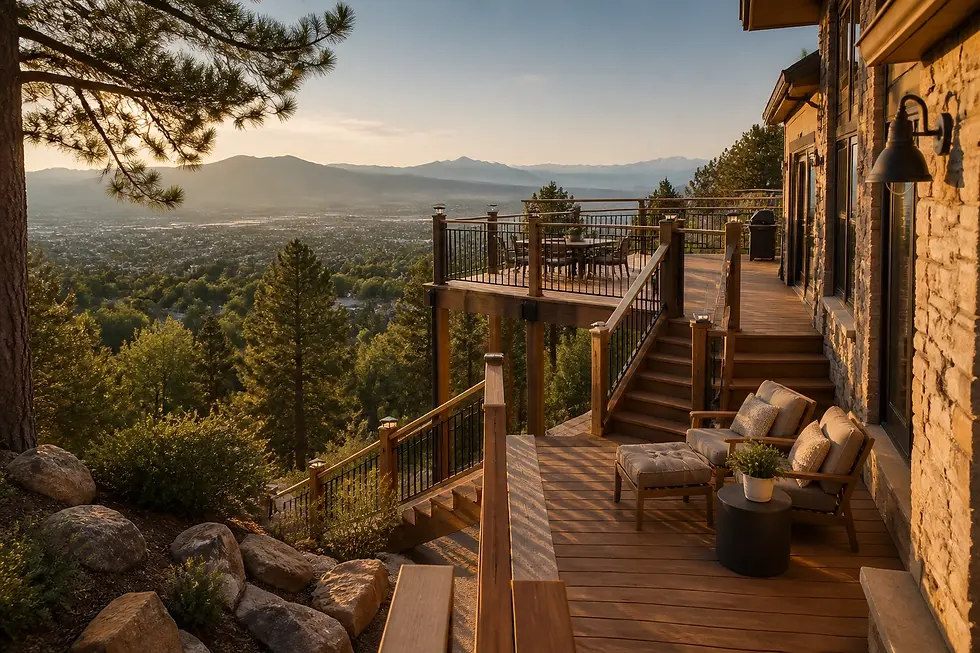
Height above grade. A low deck close to the ground is straightforward. Once a deck sits more than a few feet up, you're paying for engineered framing, bracing, and often a structural review — the exact cost varies project to project.
Footings and soil. Colorado's soils and our freeze-thaw cycle drive how deep footings go and how they're built. On sloped lots and mountain properties, foundation work can be one of the largest line items.
Size and layout. Straight runs are efficient. Multi-level decks, angled corners, and built-in benches add framing, fasteners, and labor hours.
Railing. Railing is often a bigger share of the budget than homeowners expect, and material choice moves it a lot: wood, aluminum, cable, and composite railing all sit in different ranges.
Stairs and transitions. Every set of stairs is framing, treads, railing, and labor. Wide staircases with landings cost more than a narrow single run.
Removing the old deck. Tearing out and disposing of an existing structure is real work, and it sometimes reveals rot or damage underneath that changes the plan.
Access. Tight side yards, fences, and steep driveways slow a crew down and can affect how materials get to the site.
Wood vs. composite: the up-front price and the long-run price
Most Denver homeowners end up choosing between a wood deck and a composite one, and the honest answer is that they're different purchases.
Wood usually has the lower up-front cost. It's a natural look many people love, but in our climate it wants attention: cleaning, sealing, and re-sealing on a regular cycle, plus an eye on boards that dry, crack, or splinter.
Composite decking — brands like Trex, TimberTech, Fiberon, and Deckorators — starts higher. What you're buying is a surface that doesn't need staining or sealing, holds its color, and won't splinter underfoot. Over a decade or more, many homeowners find the maintenance savings close a good part of the gap.
Neither is automatically right. If you plan to move in a few years, wood can make sense. If this is the deck you'll be grilling on for the next twenty years, composite often earns its price. We'll walk through both with real samples so the decision isn't abstract.
Front range and mountain decks are not the same project
This is where a lot of out-of-town or template-driven pricing falls apart.
On the front range — Lakewood, Arvada, Westminster, Centennial, Parker, Castle Rock, Highlands Ranch — the big considerations are sun exposure, hail, freeze-thaw, and how the deck ties into the house. Decks here live with intense UV for half the year, so material fade resistance and fastener quality matter.
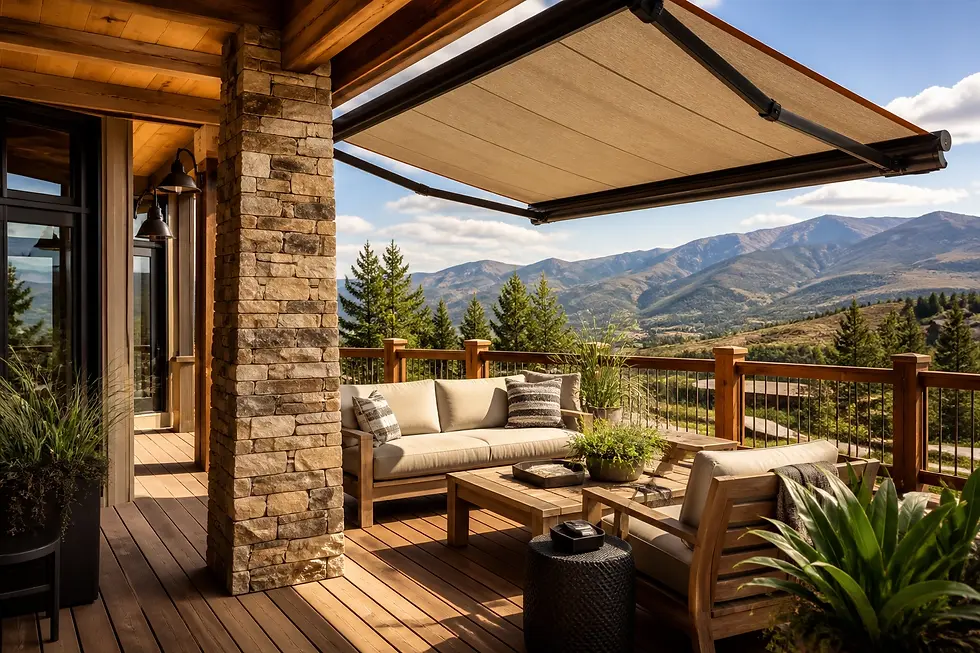
In the mountain towns — Evergreen, Winter Park, Frisco, Dillon, Breckenridge — you're dealing with snow load, altitude, longer winters, and terrain that often means a deck is partly a structural engineering question. Snow load requirements and footing depth change the build, and materials have to tolerate bigger temperature swings.
Same service, different engineering. Anyone quoting a mountain deck from a front-range template hasn't done the homework.
What belongs in a real quote
A trustworthy deck quote should tell you what you're getting, not just a total. Look for:
Framing material and fasteners spelled out
Footing depth and how they're sized
Decking brand and product line (not just "composite")
Railing type, height, and material
Whether permits are included
Stairs, lighting, and fascia called out separately
Timeline and a clear payment schedule
If a bid is much lower than the others and none of that is written down, the savings usually come from somewhere — thinner framing, lower-grade decking, skipped permits, or a crew that won't be around to honor the work.
How to get a number you can trust
Every yard is different, which is why we don't quote decks over the phone. We come out, look at the site, talk through how you actually want to use the space, and put together a design and a written price for your specific deck — not a per-square-foot guess.
That consultation is free, and you'll leave it knowing what your project costs and why.
CJ King Construction is a locally owned, owner-led Denver deck builder. Chris King has spent 15+ years building decks in Colorado, and every project is designed for the lot, the climate, and the way you live outside.
Ready for a real number? Call 720-450-5040 or request your free quote and we'll come take a look.

Comments